Back
News
Built for Years, Not Just for Summer – The Fitness Industry Revolution of 2026
23
January
2026
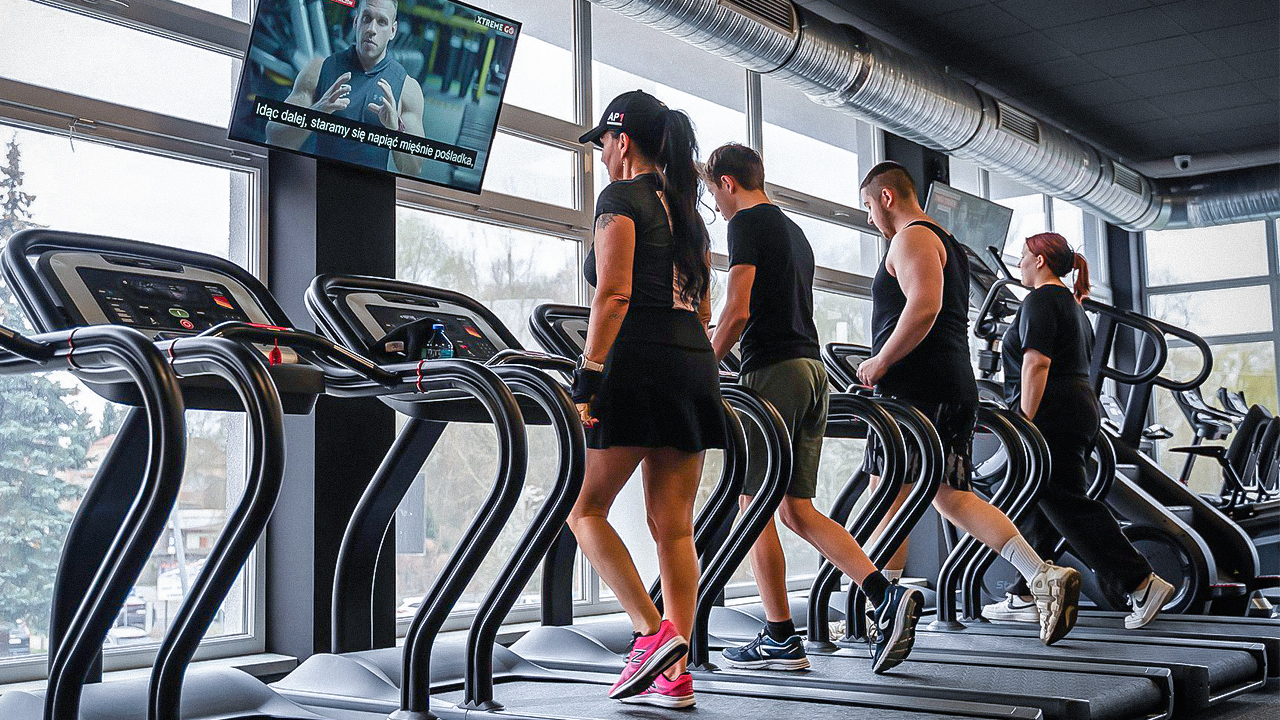
Not so long ago, fitness clubs were selling the promise of a better body. Today – and this represents a fundamental shift – they are increasingly selling something far more valuable: a predictable system for maintaining health, fitness and wellbeing. In 2026, that transformation will accelerate. Not because the industry wants it to, but because the world demands it: consumers, medicine, technology, and demographics alike.
Europe is already seeing this reflected in hard numbers: club memberships and revenues are rising, and the market has returned to strong growth after the pandemic-induced slowdown. In Poland, this trend has an additional tailwind – low market penetration (around 8%) – meaning the potential for growth remains substantial.
The Xtreme Perspective: a growing market where consistency beats seasonality
Łukasz Dojka, founder and owner of Xtreme Fitness Gyms and Xtreme KiDS, points to several developments already visible in Polish clubs: membership numbers are growing – particularly among first timers – seasonality is giving way to year-round consistency, and Gen Z is becoming the fastest-growing user segment. This reflects a broader trend: fitness is entering the mainstream as a lifestyle, not a temporary phase.
In 2026, the industry will be less about ‘January ambitions’ and more about systems that sustain health throughout the year – strength, longevity, personalisation, community and recovery. From a business perspective, that is good news. When fitness becomes a habit rather than a project, it is not only physical condition that improves – market stability does too.
The Fitness Industry in 2026: Strength, Personalisation and Long-Term Health
The Fitness Industry in 2026: Strength, Personalisation and Long-Term Health
Below are the key trends that will define 2026, from the perspective of Xtreme Fitness Gyms and the industry.
- Longevity and fitness as a pathway to health: in 2026, a fitness club will be seen less as a place to improve appearance and more as a space to improve measurable health outcomes and quality of life. Fewer motivational slogans, more concrete goals: cardiovascular fitness, strength, mobility, and metabolic health. This direction is consistent with public health recommendations: regular physical activity is one of the most effective tools for disease prevention and maintaining long-term functional fitness.
- GLP-1: the industry needs to learn a new conversation about the bod: GLP-1 medications are reshaping the market faster than many operators would like to admit. This isn’t just a story about pharmacology – it also raises questions about training models, muscle preservation and long-term sustainability of results. It is already clear that discontinuation of therapy often leads to regaining weight and a reversal of some health markers, which points to one conclusion: movement and strength training are no longer optional add-ons but a prerequisite for meaningful, lasting change.
- AI- and wearable-powered personalisation: technology has moved beyond gadgets and become a service standard. Wearables rank number one among global fitness trends for 2026 according to the ACSM. The key question is no longer whether people will use them, but how their data can be translated intelligently into behaviour change and sustainable habits. In practice, this means a new standard of personalisation: a training plan that lives and breathes – one that adapts, self-corrects and supports consistency, rather than simply looking impressive in an app.
- Strength training dominates – and this is no passing fad: gyms are returning to their roots. Resistance training has stopped being a niche pursuit for advanced athletes and is becoming the primary choice for younger generations. The growing presence of women in free weights areas is one of the most visible shifts in recent years. Strava data makes it clear: Gen Z is increasingly logging strength training as their primary activity, and women are doing so in growing numbers. This demands a response – better, more inclusive weightlifting areas, technique education and a higher standard of coaching.
- Recovery: regeneration becomes a core offering: recovery is becoming a fundamental part of training hygiene. The wellness market is expanding, and consumers are increasingly viewing health as a daily, personalised practice. For clubs, this means one thing: the expectation is growing that their offering will cover not just the training stimulus, but intelligent recovery too – from dedicated stretching zones to broader wellness solutions.
- The gym as a ‘third place’ and social fitness: younger generations are increasingly choosing fitness clubs as spaces for connection and relationship-building rather than traditional social venues defined by noise and little else. The growing significance of Gen Z in clubs and the broader lifestyle shift towards health – including mental health – is visible in market research and media reports alike. In 2026, winning brands will understand that community is not an occasional initiative, but an everyday atmosphere and set of rituals.
- Poland: expansion beyond major cities and 24/7 access: Poland still has significant room for growth, as the market is less saturated than in much of Western Europe. This opens the door to measured expansion into smaller cities and underserved areas, with flexible memberships, convenience and accessibility at the forefront. The 24/7 model is no longer a luxury – it is a response to the realities of modern life, in which work, childcare and other commitments rarely fit neatly around staffed reception hours.
- Sustainability: fewer statements, more solutions. „Green fitness” will continue to grow, but the winners will not be those who produce the most eye-catching poster, they will be those who implement real operational change: energy efficiency, durable materials and smarter infrastructure management. Technologies that allow cardio equipment to recover energy generated during workouts are also emerging – an interesting direction, though still in the early stages of market deployment and testing.