How Much Does It Cost to Open a Fitness Club? Costs, Budget, and Sample Expenses
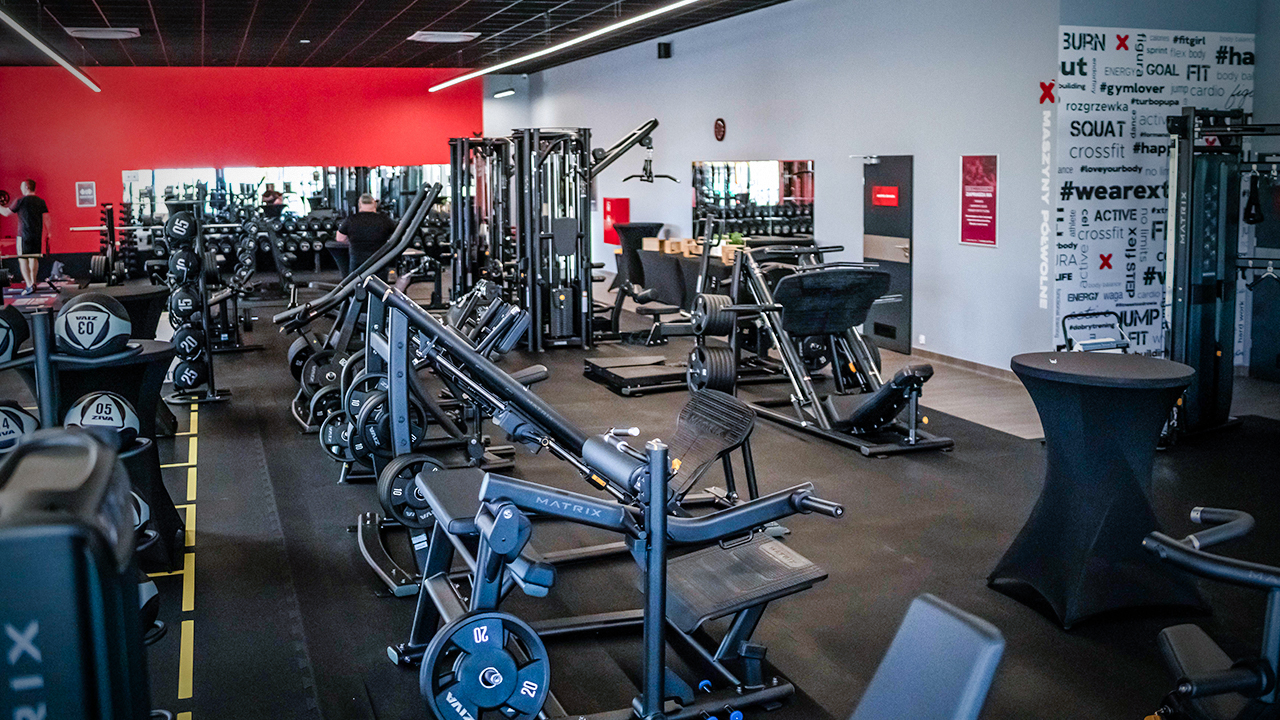
Opening a fitness club can cost anywhere from 150,000–400,000 PLN for a boutique training studio to 300,000–800,000 PLN for a club with a floor area of around 300–500 m². A larger, modern club with full facilities, multiple training zones, a reception area, changing rooms, and comprehensive equipment typically requires an investment of at least 1,000,000 PLN [1].
It is worth noting, however, that investing in two different premises – even if they are similar in size – can involve very different budgets. One may require little more than fitting out with equipment, while the other may need a full refurbishment, changes to installations, air conditioning, and more. A lower rent does not always translate into a lower overall investment.
The largest expenses when opening a fitness club typically include: lease and deposit, premises fit-out, equipment, reception area, changing rooms, sanitary facilities, a member management and payment system, marketing activities, team recruitment, and a financial reserve to cover the first months of operation. The costs involved in opening a fitness club independently differ from those associated with a franchise model. In the latter case, you will receive projected cost estimates before you even get started.
What Determines the Cost of Opening a Fitness Club?
The costs of opening a fitness club are largely determined by decisions made before launch: the choice of premises, the planned scope of renovation work, the service offering, the legal structure of the business, staffing decisions, and many others.
Premises
When it comes to the premises, the key factors are floor area, the current standard of finish, the scope of renovation work required, the layout, and the equipment you will need to deliver the best possible experience for members. Location also plays an important role (you can read more about this here), as does the level of rent – in large cities, this can reach 10,000–20,000 PLN per month. In many cost breakdowns published online, the initial outlay on the premises alone – covering the deposit and first month's rent – is estimated at 20,000–80,000 PLN. Refurbishment and fit-out can add a further 50,000–200,000 PLN, with additional equipment costing around 20,000–50,000 PLN.
Floor Area
The format of the club also has a significant bearing on costs. A boutique training studio, an unstaffed neighbourhood gym, and a full-service fitness club all involve very different levels of investment – even if all three are commonly referred to as "opening a gym." Floor area affects not only the rent, but also the number of training zones, the size of the changing rooms, the amount of equipment required, and the ongoing costs of running the facility.
Equipment
One of the most significant factors influencing the overall budget is the fit-out and equipment. In sample cost breakdowns, cardio equipment is typically priced at 80,000–300,000 PLN, while strength equipment ranges from 60,000–250,000 PLN. This illustrates that equipping a club goes well beyond a few treadmills and weight machines. Free weights and smaller accessories also need to be factored in, not to mention the reception area, changing rooms, and staff facilities.
The budget is also affected by how quickly the club becomes financially self-sustaining. In the first few months, you should expect fixed costs to be present from the outset – including rent, utilities, salaries, marketing, and CRM. Estimates published in business guides suggest that the monthly operating costs of a gym can reach 30,000–70,000 PLN, with staffing alone accounting for 10,000–50,000 PLN per month, depending on the scale and operating model [4]. We have compiled the key figures in the table below:
| Area | Estimated Cost |
| premises and lease | approx. 20,000–80,000 PLN |
| premises fit-out | approx. 50,000–200,000 PLN |
| installations | approx. 30,000–100,000 PLN |
| cardio equipment | approx. 80,000–300,000 PLN |
| strenght equipment | approx. 60,000–200,000 PLN |
| changing rooms and facilities | approx. 15,000–50,000 PLN |
| marketing | approx. 10,000–30,000 PLN |
| staff recruitment | approx. 10,000–50,000 PLN |
| total sample costs | approx. 275,000 PLN – 1,060,000 PLN |
The figures above do not constitute a ready-made budget. Rather, they illustrate the scale of expenditure that may be involved in launching a gym or fitness club. The final budget you should account for will depend on the premises, floor area, standard of equipment, scope of fit-out works, and marketing activities.
It is worth noting that some costs can be anticipated from the outset – equipment, reception fit-out, signage, changing rooms, and so on. Others may only come to light during the renovation: electrical work, the condition of the floors, the need to reconfigure rooms. It is precisely these less glamorous line items that can have the greatest impact on the budget. When forecasting opening costs, you should also include a financial reserve to cover the first months of operation. A club incurs costs from day one: rent, utilities, salaries, marketing, equipment servicing, systems, and administration.
If membership sales only begin after opening, you will largely be covering this period from your own funds. Pre-sales are therefore not simply an add-on to the marketing campaign – they are one of the key ways of reducing financial risk.
Opening a Fitness Club – Is It Cheaper to Go Independent or Franchise?
The lowest cost of opening a fitness club typically applies to a smaller studio or a simpler business format. This may be a good route for someone who wants to start locally, on a small floor area and with a limited number of training zones. However, it will not offer the same opportunities as a full-service fitness club operating under a recognised brand. If you are weighing up which option is more cost-effective, simply comparing the upfront cost of opening independently against joining a franchise is not enough. You need to consider the components of each model and how they affect the return on investment timeline. You can read more about how to open a fitness club as a franchisee.
When opening a club under a franchise model, the benefits of scale are significant. A large network is better positioned to negotiate favourable lease terms, equipment pricing, and even financing for fit-out costs. In the case of Xtreme Fitness Gyms clubs, the franchise partner does not have to manage the design or renovation process, as these are handled by the franchisor. To join the Xtreme Fitness Gyms franchise, a partner should have their own capital contribution of approximately 450,000 PLN. The total investment amounts to close to 1,200,000 PLN for a club with a floor area of approximately 500–1,000 m².
These figures are broadly comparable to those for large independent fitness clubs discussed earlier. Importantly, however, they relate to an entirely different type of opening. By joining the Xtreme Fitness Gyms network, the investor gains far more than the right to use the brand. The package includes access to the knowledge and quality standards developed and tested across more than 180 active locations. They can count on support with selecting the right location (the assessment of its potential is handled by the franchisor), fit-out, equipment procurement, financing, marketing campaigns, and pre-sales. Franchisees also receive access to the systems and tools needed to manage the club, and take part in training programmes that prepare them to run the business effectively.
When you choose to open a gym or fitness club independently, the entry threshold may be lower, and you will certainly have greater freedom of action – but with that comes greater responsibility. You bear the consequences of decisions that ultimately determine the entire budget. With a franchise, you benefit from the network's accumulated experience, which not only helps reduce the number of costly mistakes but also allows you to scale the business more quickly. This in turn has a direct impact on the returns you will achieve. The fairest comparison, therefore, is not simply the amount of capital required to get started, but the overall scope of the investment.
Read more: how to plan a marketing campaign for a gym.
Costs After Opening the Club
Once the club opens, it begins generating revenue through membership sales and other elements of its offering. It also has fixed costs that must be met regardless of whether sales are growing as planned.
This is why assessing the investment purely on the basis of the cost of premises, fit-out, and equipment is not enough. You also need to project what the monthly profit and loss account will look like. In practice, after launch the main ongoing costs include premises rent, utilities, staff costs, marketing, system access fees, equipment servicing, accountancy, insurance, and more. In a franchise model (find out more about how franchising works), fees arising from the franchise agreement are also added. The difference is that a franchisee has access to financial projections developed on the basis of data from the other 180 locations in the network – and therefore knows what the operating costs will be before even getting started.
This matters because in an independently run club, costs can be fragmented. Separate charges appear for the CRM, payment system, advertising campaigns, consultancy, training, and more. Each of these items can appear to be a "small cost" – until they all need to be brought together into a monthly budget. After opening, therefore, what matters most is not only the level of costs, but their predictability. If an investor understands the cost structure, they are able to estimate sales volumes in the coming months, fixed and variable costs, and the point at which the business will break even. It becomes easier to assess whether the business has a safe margin.
This does not mean that franchising makes the business cost-free. What it does is bring structure to the business. The investor still has bills to pay, but operates within a proven model rather than through trial and error.
This makes it easier to avoid a situation where the club is open, invoices start arriving, and there are insufficient funds to cover some of the outgoings. The greatest risk when opening a fitness club is not a high budget – it is a poorly calculated one. Before committing to the investment, it is therefore worth having not just a list of projected expenses, but a complete opening model. Only then does it become clear whether the budget is genuinely achievable, or whether it simply looks good in the first cost estimate.
Sources:
[1] PEP, eFitness, NSSD – indicative cost ranges for opening a gym and fitness club.
[2] PEP – sample costs for premises, fit-out, installations, equipment, and facilities.
[3] Eurosport Fitness – indicative floor areas and gym formats.
[4] NSSD – monthly gym operating costs, marketing, and salaries.